Boostiny: helping influencers get started faster and see what they earn
Boostiny is an affiliate platform where influencers promote brands with coupon codes and earn a commission on every sale. I was the product designer for the influencer side: onboarding, the dashboard, and the design system behind both.
- Registration time
- 5 → 2 min
- Form abandonment
- −50%
- Design-to-dev handoff
- 30% faster
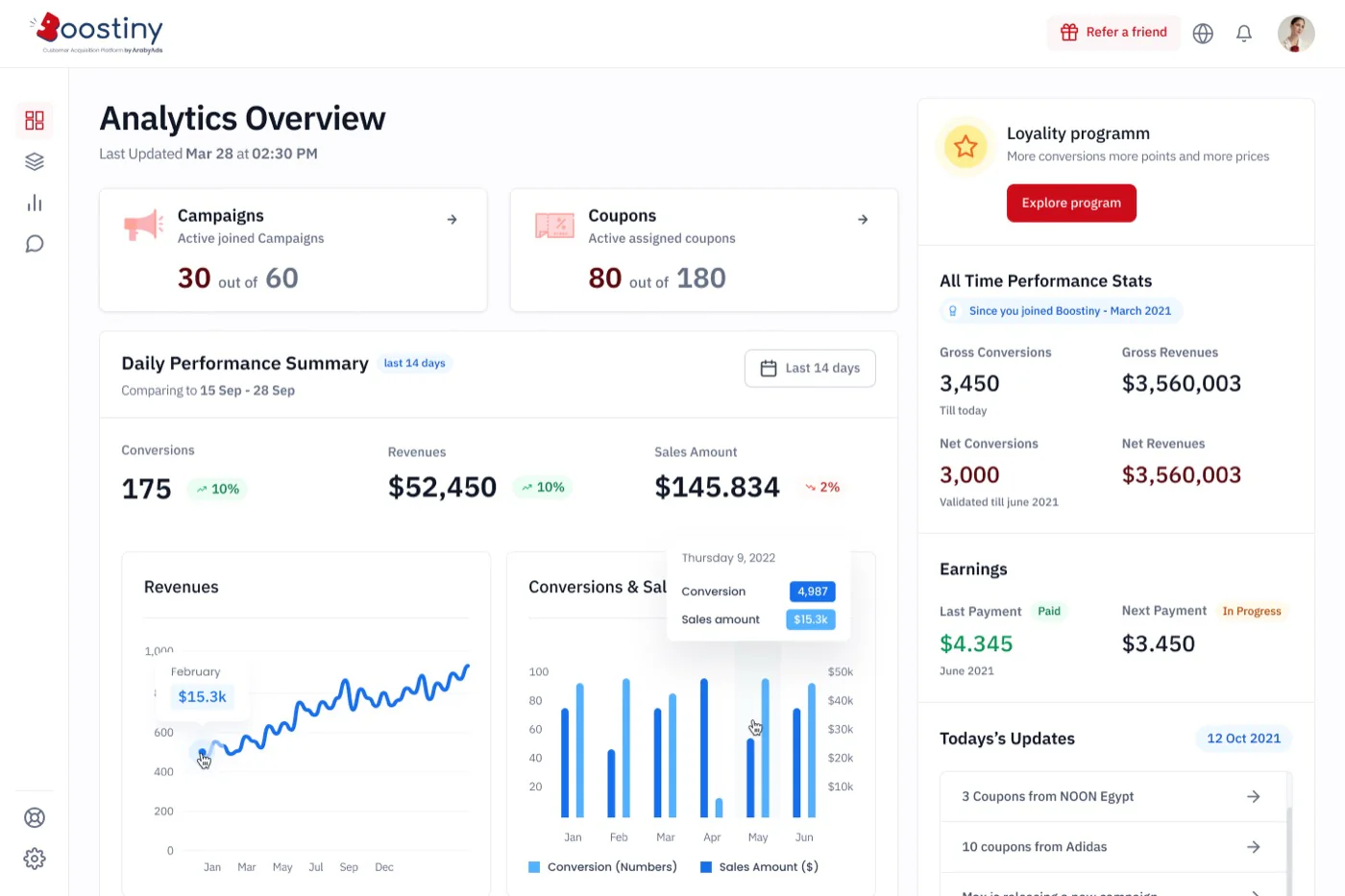
The analytics overview: active campaigns and coupons first, then daily conversions, revenue and sales.
Where it started
Two things kept coming up.
Signing up took too long. New influencers had to fill in one long form before they could see anything. Most of the people who gave up did it somewhere around fields 8 to 12.
The dashboard didn’t answer anything. Conversions, ROI, coupons and transactions were all shown at the same size with no order to them. Influencers scrolled, exported everything to a spreadsheet, or gave up.
Talking to people
I started with the people who heard the complaints every day: 4 account managers and 2 performance experts. Short, informal chats, about 20 minutes each. I asked where influencers get stuck, what they screenshot, and what they ask support about.
One answer came up again and again. Influencers really only care about two things: how much did I make, and which of my coupons are working?
I also looked at how CJ and Impact handle the same problem. Both were slow and their reporting was rigid, which told me we could stand out just by being fast and clear.
From there I wrote user stories, sorted them into must-have, nice-to-have and not-now, and sketched storyboards before going into high fidelity. Then I tested the new onboarding and dashboard with real influencers before launch.
Onboarding: let people in first, ask for the rest later
I split the long form into three steps: account, profile, payout. Step 1 only asks for what’s needed to create the account, so people are inside in under two minutes. Steps 2 and 3 come after, with a progress bar that encourages people to finish instead of blocking them. Errors show while you type, not after you press submit.
This was the decision I had to defend the most. The account managers wanted every field filled in on day one so their records were complete. I pushed for asking for less up front. What surprised us was that more people finished steps 2 and 3 once step 1 felt quick.
The dashboard: answer the two questions first
Those two questions became three numbers at the top of the dashboard: revenue, transactions and sales. They are always visible. Below them, influencers can switch between views per campaign, per coupon or per date, and the table at the bottom can be filtered, sorted and searched, so most people no longer need to export anything.
The rule I used to decide what goes where: if a number doesn’t help answer did I make money or what’s converting, it moves one click deeper.
A design system so engineers stopped guessing
Before this, every screen had its own slightly different buttons and tables. I built Boostiny’s first design system in Figma: variables for colour, type, spacing and radius, Auto Layout everywhere, and contrast checked for accessibility. Engineers could take tokens straight from Figma instead of copying hex codes, and handoff got 30% faster.
What came next: a loyalty programme
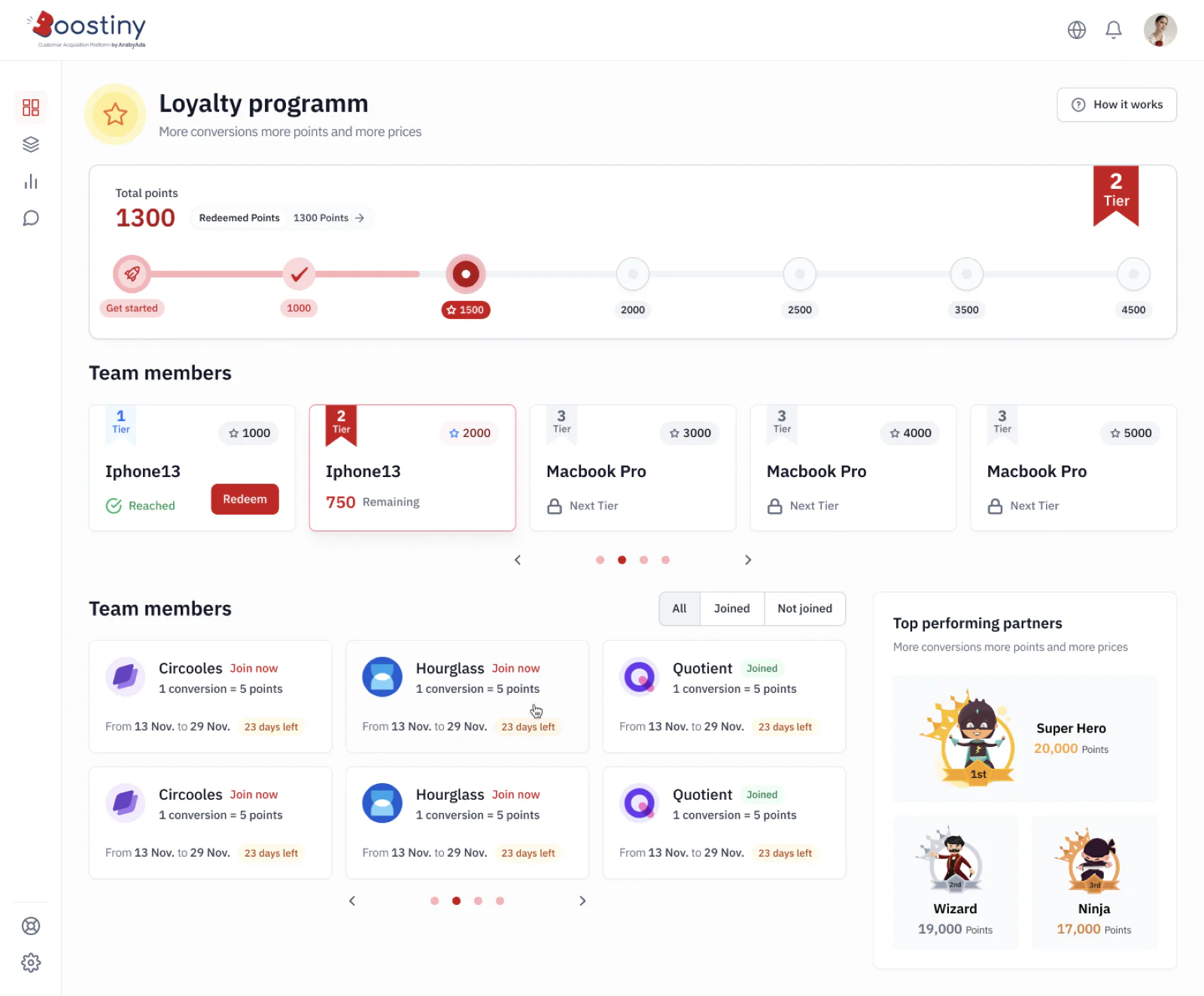
In the first release I deliberately left out badges and rewards so we could ship onboarding and the progress bar sooner. Once the core flows were live, we added a loyalty programme: influencers earn points, move up tiers, and can see a leaderboard.
What I’d improve next
- Show money in three clear stages, earned, pending and paid, so influencers always know when money will reach them.
- Replace empty tables for new influencers with sample data, so the dashboard makes sense before their first sale.
- Alert influencers when one of their coupons suddenly drops, so they can react the same week.